
I've spent more than 20 years around slot games, and the machines I review today owe almost everything to a handful of inventions made over a century ago. The mechanics have changed beyond recognition (from cast-iron reels to random number generators and mobile screens), but the core idea has barely moved: line up the symbols, win a prize. This is how slots got from a San Francisco workshop to the smartphone in your pocket.

What to expect
Before the Liberty Bell: the 1891 poker machine
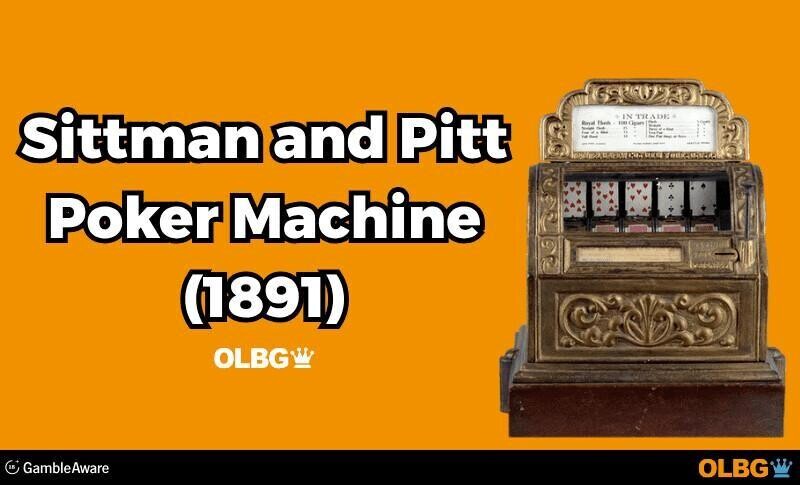
The slot's earliest ancestor wasn't a slot at all: it was a poker machine. In 1891, the Brooklyn firm Sittman and Pitt built a coin-operated gambling machine with 5 drums holding 50 card faces. Players dropped in a nickel, pulled a lever, and hoped the drums stopped on a strong poker hand. It was wildly popular in New York bars, but it had a catch that would shape everything to come: with 50 cards across 5 drums, there were far too many possible outcomes for any mechanism to pay out automatically.
So wins were settled across the bar. Line up a pair of kings and the bartender might pour you a free beer. A royal flush could earn cigars or drinks. Tellingly, the operators quietly stacked the odds by removing 2 cards (usually the 10 of spades and jack of hearts) halving the chance of a royal flush. The house edge, it turns out, is older than the automatic payout.
Charles Fey and the Liberty Bell
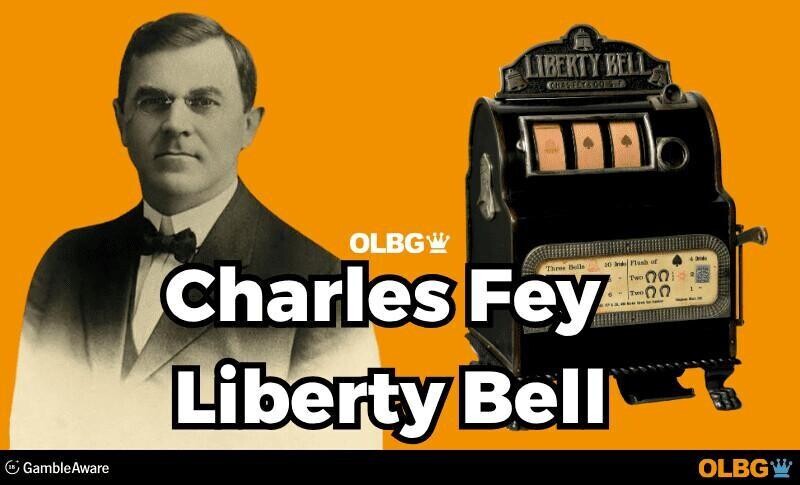
The breakthrough came from Charles Fey, a mechanic born in 1862 in Vöhringen, Bavaria (the youngest of 15 children) who emigrated to the United States and settled in San Francisco. Fey realised that the way to an automatic payout was to simplify. Designed in 1894, he replaced the 5 drums with 3 reels, and the 50 playing cards with just 5 symbols: hearts, diamonds, spades, horseshoes and a cracked Liberty Bell.
That reduction was the masterstroke. With only 3 reels and 5 symbols, a simple mechanism could detect a winning line and pay out coins on its own. Line up 3 bells and the machine dropped its top prize: 10 nickels, 50 cents, without an attendant. The Liberty Bell was born, and with it the template every slot has followed since.
2 quirks of history helped it spread. First, gambling was illegal in California, so Fey couldn't patent the design. Rivals copied it freely, which ironically accelerated its adoption. Second, most of Fey's machines were destroyed in the 1906 San Francisco earthquake, which is part of why surviving originals are such prized museum pieces today. One sits in the Nevada State Museum as part of the Fey Collection.
A note on dates
How fruit symbols, and the name ‘fruit machine’, arrived
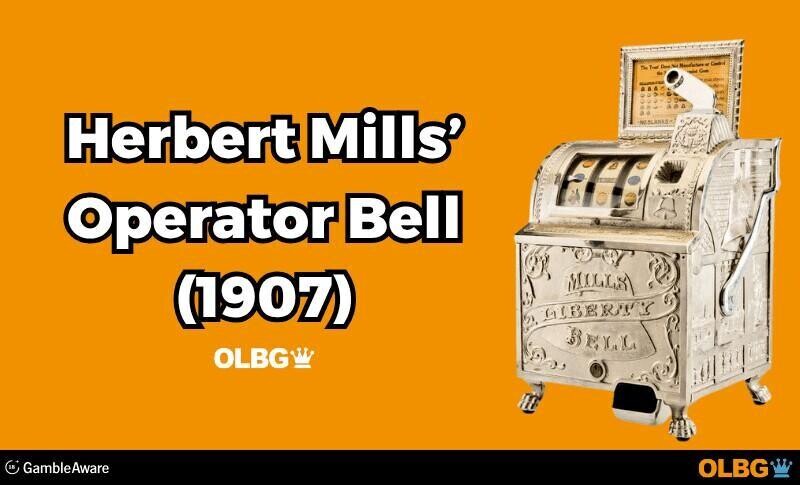
The cherries, lemons and plums now synonymous with slots weren't on Fey's machine. Fruit symbols arrived in 1907, when the Chicago manufacturer Herbert Mills produced the Operator Bell, a copy of Fey's design built at a scale his workshop never could. By this point slot machines were banned in many states, so operators leaned on a loophole: rather than pay cash, the machines dispensed fruit-flavoured chewing gum, and the reel symbols simply advertised the flavour you'd won.
That's the origin of the whole visual language of slots. Cherries, lemons, oranges and melons were gum flavours. The famous BAR symbol derived from the logo of the Bell-Fruit Gum Company. And in Britain, where these machines later landed, the fruit imagery gave the format its enduring nickname: the fruit machine.
A very British invention: fruit machines, AWPs and the arcade
Here the story splits across the Atlantic. Electric gaming machines were exported to the UK during the 1960s, but British gambling law treated them very differently from Nevada. The Betting and Gaming Act 1960 legalised commercial gaming machines in clubs and arcades, and the Gaming Act 1968 built the licensing framework (much amended, but still recognisable) that governs the industry today. Officially, these machines are AWPs: amusements with prizes.
The crucial difference was money. British stake and prize caps were dramatically lower than anything in Las Vegas, and that single constraint shaped the entire British format. If a machine could only take pennies and pay modest prizes, it had to entertain over a long session rather than dangle a life-changing jackpot. So UK designers built in feature boards, bonus trails, and a rhythm of small, frequent wins, and, most distinctively, elements of player choice.
This is where the nudge, the hold and the gamble were born. A nudge moves a chosen reel down a single position: a hold lets you freeze 1 or more reels for your next spin; the gamble offers a hi-lo or ladder to double a small win. None of these exist on a classic Vegas slot: they're a British response to low stakes, adding a veneer of skill and control that kept players engaged between rounds at the pub or on the pier.
Geography reinforced it. British machines didn't sit in destination casinos; they lived in working men's clubs, seaside arcades and the corner of the pub, alongside drinking, talking and watching the football. That meant compact cabinets, audio that didn't dominate the room, and quick game cycles you could play in a half-time break. The fruit machine became a genuine piece of British leisure heritage: the same chirp and clatter has echoed through arcades for the better part of a century.
Why ‘Fruit Machine’ still matters online
Money Honey: the electromechanical leap
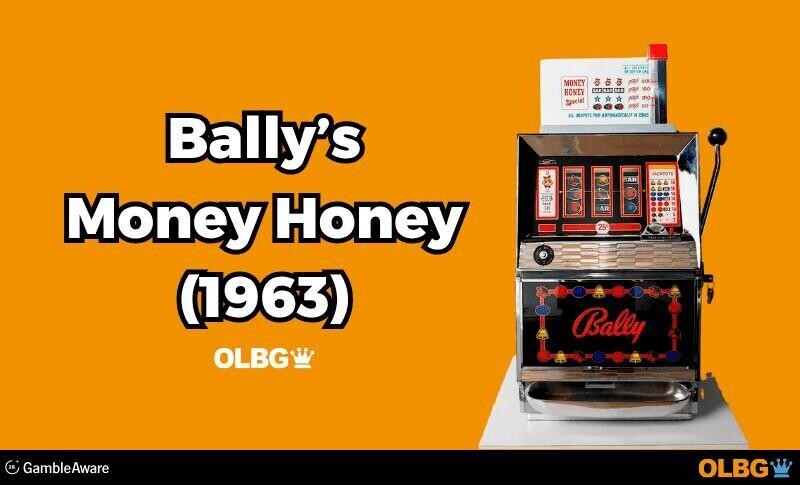
Back in the US, the next revolution arrived when Bally released Money Honey in 1963, the first fully electromechanical slot. It still had spinning reels and a lever (the lever is where ‘one-armed bandit’ comes from), but underneath it carried a bottomless hopper that could pay out up to 500 coins automatically, with no attendant.
Bigger automatic payouts, multi-coin bets and greater reliability made it a runaway success, and pushed the side lever towards obsolescence. Within a decade, electronics had taken over.
Fortune Coin and the first video slot
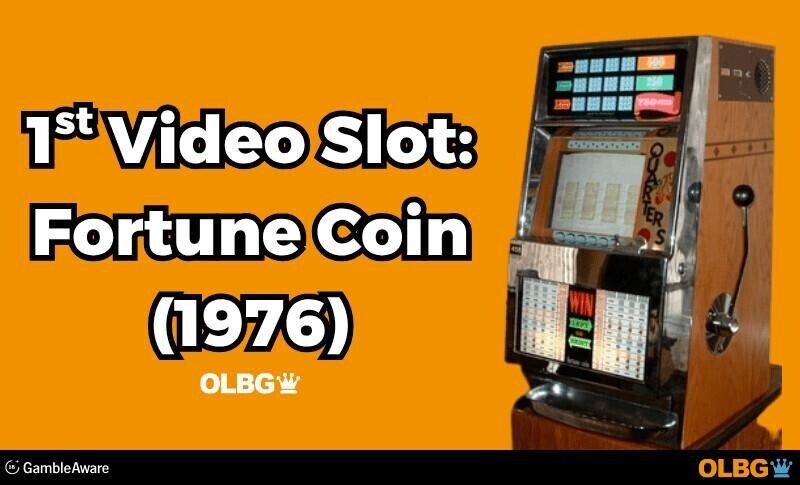
In 1976, the Las Vegas–based Fortune Coin Company replaced physical reels with a screen (a modified 19-inch Sony Trinitron) to create the first true video slot. After security modifications satisfied the Nevada regulators, it spread across the Strip.
IGT acquired the company and its technology in 1978, and video became the template for everything that followed: richer graphics, bonus features, and outcomes driven by a random number generator (RNG). The RNG is also what makes a game's volatility possible, how often and how big it pays, independent of its RTP.
Online and mobile: slots in the 21st century
The move online transformed slots from a machine you visited into a game available anywhere. The first online casinos and slot sites appeared in the mid-1990s, and smartphones did the rest: today, mobile play accounts for the majority of online slot activity.
Studios such as Pragmatic Play, NetEnt, Microgaming (now Games Global) and Big Time Gaming now release games with elaborate themes, mechanics like Megaways and progressive jackpots, and free spins features that trace a direct line back to those British bonus boards.
In the UK, the Gambling Act 2005 modernised the rules and created the Gambling Commission, bringing online play, AWPs and casino slots under a single regulator. It's why the machines in your local arcade and the games on a licensed slot site now share a common framework of stake limits, age verification and player protections.
One thing to watch as a modern player: the same online slot can be offered at different RTPs (return-to-player) by different operators. A game advertised at 96% at one casino may run materially lower elsewhere, so it pays to check the RTP on the specific site you're playing. It's the single biggest piece of consumer knowledge that separates informed players from the rest. If you want to compare mechanics risk-free first, OLBG’s free demo slots page let you try over 500 games with no deposit.
The people and machines that made slots
- Sittman & Pitt (1891): the 5-drum poker machine that proved the appetite but couldn't pay out on its own.
- Charles Fey (1894): the ‘godfather of slots’, whose 3-reel Liberty Bell cracked automatic payouts.
- Herbert Mills (1907): mass-produced the Operator Bell and gave slots their fruit symbols and the BAR sign.
- Bally's Money Honey (1963): the first electromechanical slot and its 500-coin automatic hopper.
- Fortune Coin (1976): the first video slot; absorbed by IGT in 1978.
- Big Time Gaming (2016): the Megaways mechanic (with the release of Dragon Born Megaways), arguably the most influential modern innovation.
A quick timeline
| Year | Milestone |
|---|---|
| 1891 | Sittman & Pitt build a five-drum, 50-card poker machine in Brooklyn: wins paid by the bar |
| 1894 | Charles Fey's Liberty Bell: first 3-reel slot with automatic payout |
| 1902 | Slot machines banned in California: manufacture continues regardless |
| 1907 | Herbert Mills' Operator Bell brings fruit symbols and the BAR sign via Bell-Fruit Gum prizes |
| 1960 | Britain's Betting and Gaming Act legalises commercial gaming machines in clubs and arcades |
| 1963 | Bally's Money Honey: first electromechanical slot, 500-coin automatic hopper |
| 1968 | UK Gaming Act formalises the AWP licensing framework and low stake/prize caps |
| 1976 | Fortune Coin: first video slot, IGT acquires it in 1978 |
| 1986 | IGT's Megabucks launches the first wide-area progressive jackpot |
| 1994 | The first online casino, The Gaming Club, brought slots to the web |
| 2005 | Gambling Act 2005 modernises UK regulation and creates the Gambling Commission |
| 2010-today | Megaways, mobile-first play and multi-operator RTP variation define the modern game |
Keep reading
Now you know how slots evolved, you can go deeper with my 'Learning' guides:

🎰 Online Slots Glossary: A to Z of Slot Terms

⏰ When Is the Best Time to Play Slots Online?

Slot Myths and Misconceptions: The Truth Behind the Reels

🎰 How to Win at Slots - Slot Game Strategies


